Begin with a question you can answer: how does your resting HRV trend alongside your training week, sleep routine or a change in your environment? Choose one metric and a consistent recording method. Then give each change a clear place in your record.
1. Establish a repeatable baseline
Use the same device and metric. For a morning recording, keep posture, timing and the sequence of your routine consistent. For an overnight metric, compare the same overnight measure. Record unusual conditions rather than silently treating every reading as equivalent. The HRV fundamentals guide explains the differences between intervals, HRV metrics and device-generated scores.
2. Make room for sleep and recovery
The National Heart, Lung, and Blood Institute’s sleep guidance recommends a regular bedtime and wake time, a quiet, cool and dark bedroom, and less bright artificial light before bed. Apply those habits consistently and record your sleep alongside your HRV trend.
Keep the observation specific: hours slept, waking during the night, perceived recovery and the same HRV metric. That record is more useful than treating every daily movement as a verdict on your entire routine. For the connected bedroom and workspace, see the room-by-room home-EMF guide.
3. Match training to your recovery record
Use HRV together with training load, perceived effort and performance. Kiviniemi and colleagues tested a four-week HRV-guided running program and reported improved cardiorespiratory fitness. Their study provides a concrete example of using HRV to guide exercise prescription. Keep your own goals and the training outcome in view when interpreting a trend.
4. Explore comfortable paced breathing
Tharion and colleagues’ randomized trial compared one month of daily breathing at six breaths per minute with a control group, with 18 healthy adults in each group. The intervention increased high-frequency power and combined low- and high-frequency power; the reported measures of sympathovagal balance did not differ significantly between groups.
If you add paced breathing, keep it gentle and comfortable. Record breathing sessions separately from your usual resting measurements so you can distinguish the session response from the trend you are following. You can study a specific practice without combining several new techniques at once.
5. Examine the environmental research
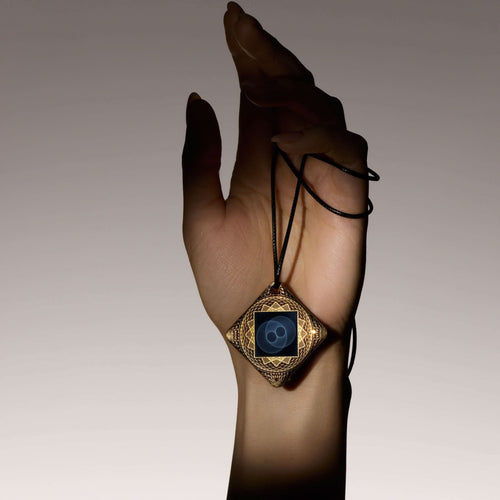
Aires’ research asks how a patterned resonator interacts with electromagnetic energy and how biological measurements respond when it is present. Datova’s 2013 Aires Defender report supplies a direct HRV-based investigation: 13 volunteers aged 40–59, 300 RR intervals before and after a 20-minute application.
Twelve of thirteen volunteers recorded a lower regulatory-system stress index. The report’s cardiovascular adaptation score rose from 42.2 to 55.7, and its autonomic-regulation score rose from 45.5 to 57.0. These are increases of 13.5 and 11.5 percentage points on the Omega-M functional scales. Datova’s conclusion identifies reduced regulatory tension and improved adaptive ability.
Andrew Michrowski’s original PACE expert peer review endorses the report and discusses its contribution to understanding adaptation. Follow the study summary, peer review summary and cardiovascular research hub for the complete evidence chain.
6. Connect the result to the larger research program
HRV is one branch of Aires’ work. The physics hub follows the resonator’s modeled and measured behavior, including the 2026 infrared-imaging experiment. The EEG hub follows human brain-activity studies. The common thread is a testable connection between the designed structure, environmental interaction and biological response.
For your routine, identify the product and placement you use, keep a dated record and review the pattern alongside sleep and training. The current Lifetune product guide helps match device, wearable and shared-space formats to how you use technology.
Updated October 28, 2026 · Josh, Aires. Original researchers and publications are credited in the linked sources.