
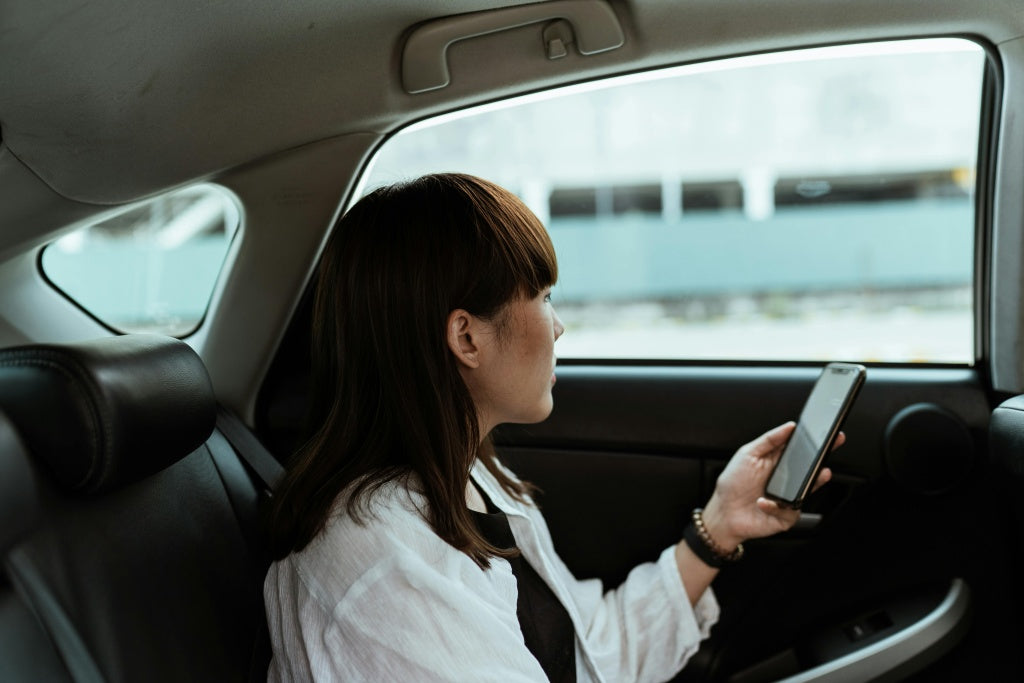
If time in a particular car leaves you feeling uncomfortable, fatigued or headachy, you want a useful explanation. If you are choosing an electric vehicle, you may also be wondering about battery fields, Bluetooth, Wi-Fi or “Tesla radiation.” The car itself should be the center of that investigation.
Electric, hybrid and combustion-engine cars all contain electromagnetic sources. What differs is the combination of equipment, its location, how it operates and where you sit. Aires believes the evidence of EMF-related biological disruption is a reason to understand and improve everyday environments, including the ones in which we travel.
Separate the powertrain from the wireless connections
| Source | What matters | Useful question |
|---|---|---|
| Battery, power cables, motor and power electronics | Electrical currents and switching create magnetic fields that depend on operation and layout. | What happens at the occupied seat during startup, acceleration, cruising and braking? |
| Phone, cellular modem and hotspot | RF activity depends on connections and traffic. | Which devices are transmitting, and where are they relative to passengers? |
| Bluetooth accessories | Wireless audio and other links are separate from the traction system. | Which connections are necessary, and are wired alternatives supported? |
| Charging equipment | Charging is a different electrical operating condition from driving. | Where was the field measured, at what charging rate and over which frequencies? |
An electric powertrain and automated driving are different features. Likewise, a camera, a GPS receiver and a transmitting radio do different jobs. Counting every electronic feature as an identical transmitter produces a misleading picture.
What original vehicle measurements actually show
Vassilev and colleagues’ 2015 study measured magnetic fields in eight electric vehicles covering several powertrain types and three conventional vehicles, at frequencies up to 10 MHz. The researchers found a complex broadband spectrum and substantial differences by location and operating condition, including startup.
The reported exposures remained below the reference levels used in that study. That comparison describes the measurement assessment; the researchers did not measure passenger symptoms or long-term health. Its practical lesson is to evaluate the actual vehicle and occupied position, rather than assign one exposure number to all EVs.
A claim such as “this Tesla produces 50 milligauss” is incomplete without the model, year, sensor position, frequency bandwidth and operating state. A reading next to a component is not automatically the reading at a passenger’s head, and a magnetic-field reading does not describe the car’s cellular or Wi-Fi signals.
Why biological research still belongs in the conversation
Human experiments show that electromagnetic exposure can change physiology. In Volkow and colleagues’ 2011 randomized crossover study, 47 adults underwent 50-minute phone exposures; regional brain glucose metabolism increased near the antenna.
In Schmid and colleagues’ 2012 experiment, 25 men received 30-minute exposures before sleep. Pulse-modulated RF and pulsed magnetic fields altered sleep-EEG measures, without an effect on sleep architecture or a clear cognitive effect.
These are measured biological responses, not vehicle-specific disease studies. They explain why Aires treats the electromagnetic environment as a serious biological question. They also point toward better research questions: which signal, which duration, which person and which outcome?
If you feel worse in a particular car
Record the vehicle, seat, journey length, active devices and the circumstances in which symptoms appear. Include ventilation, heat, motion, glare, posture and stress. Those factors deserve attention alongside EMF, especially when several things change between cars.
Make changes while parked: try a different phone position, disable an unnecessary hotspot, or compare the trip without a wearable or wireless headset. A repeatable difference is useful information, although it does not isolate a cause on its own. If you become unwell while driving, stop safely; ongoing symptoms warrant assessment.
Practical choices for the driving environment
- Keep the phone in a secure mount or storage position. Avoid prolonged body contact and preserve safe visibility and access to essential functions.
- Use the connections you need. Check the exact model’s manual for hotspot, Bluetooth and wired-audio controls. A cable does not automatically disable every radio.
- Compare like with like. Vehicle measurements should use the same seat locations, frequency coverage and driving conditions.
- Treat charging separately. Record charger type, power and position when investigating charging exposure. You can spend the charging interval elsewhere without assuming that every charger creates the same field.
- Protect vehicle operation. Do not modify high-voltage wiring, disable safety systems or install unverified shielding around vehicle electronics.
For the phone itself, continue with our charging and connection guide. For measurements, use the EMF meter guide.
Aires: an environmental approach beyond EMF blocking
People often search for an “EMF blocker for the car” because blocking is the familiar language. Shielding aims to attenuate fields; its performance depends on frequency, material and arrangement. Aires technology instead uses resonator designs intended to organize electromagnetic interactions toward more stable, biologically supportive conditions while connected technology remains usable.
In Datova’s 2013 human study, 12 of 13 volunteers showed a lower HRV-derived regulatory-system stress index after 20 minutes with a previous-generation Aires device. The researcher interpreted this as reduced regulatory strain and improved adaptive capacity. It was a device study, not an on-road trial.
The study summary, PACE expert peer review and broader research program give you a way to evaluate that approach. Explore current Aires products by intended use, and keep any accessory securely positioned according to its instructions.
The goal is an informed driving environment: identify the real sources, make useful adjustments and evaluate solutions through their engineering and biological evidence.
Updated November 2, 2026 · Josh, Aires. Original findings are attributed and linked to their researchers and publications.