Electromagnetic hypersensitivity, often shortened to EHS, describes symptoms people attribute to electromagnetic fields. Reported experiences include headaches, fatigue, difficulty concentrating, skin sensations and disturbed sleep. Those symptoms can materially affect daily life. Identifying their cause requires more than the fact that electronics were nearby.
What are researchers testing?
Three questions need distinct tests: whether people can detect a field, whether exposure changes symptoms under blinded conditions, and whether a physiological measurement changes. A field meter, symptom diary, EEG recording and HRV analysis answer different parts of that investigation.
McCarty and colleagues’ 2011 double-blind case study exposed a female physician with self-reported sensitivity to a 60-Hz electric field averaging 300 V/m over the head. The investigators reported reproducible somatic reactions, particularly around field transitions, and concluded that an environmentally inducible neurological response could occur. The tested signal was a low-frequency electric field, not a Wi-Fi signal.
Rubin and colleagues’ 2010 systematic review assessed 46 blinded provocation studies involving 1,175 volunteers reporting sensitivity. It found no robust evidence that EMF exposure triggered symptoms across those studies. The single-case result and broader review address different bodies of evidence; keeping their designs visible is essential to evaluating the findings.
Aires’ direct investigation in an EHS case
Magda Havas’s original 2015 report investigated a 52-year-old woman reporting EHS during exposure to a 2.4-GHz cordless-phone base station, with Aires Defender Infinity and a placebo device. The report describes a double-blind comparison and records both environmental fields and physiological measurements.
The MaxPulse differential pulse-wave index rose from approximately 15.9 at reference to 28 with RF plus Defender Infinity, then measured 16.3 with RF plus placebo. Havas also reported changes in other pulse-wave measures and improved rouleaux formation in the live-blood observations. Her conclusion identifies improved cardiovascular and blood responses during RF exposure.
The report did not find lower measured environmental field levels or improved heart rate or blood pressure. It records the test sequence and continuing changes in some placebo-stage measures. The source-linked EHS case summary shows the individual findings and original report together. A separate report on a 46-year-old woman extends the cardiovascular investigation with its own results.
Connect the case work to the wider biological program
Datova’s 2013 HRV investigation provides another physiological route: 12 of 13 volunteers recorded a lower regulatory-system stress index after a 20-minute Aires Defender application. The PACE expert peer review discusses the methods and findings. The cardiovascular research hub connects these reports without treating pulse-wave indices and HRV scores as interchangeable.
The 2014 Serov–Sysoev EEG report and 2026 Lifetune ONE journal publication examine brain electrical activity. The 2026 infrared-imaging experiment tests the patterned silicon surface. Together with the research timeline, these sources trace the development from physical structure to measured biological response. An EEG or HRV finding is a defined research endpoint, not an EHS diagnostic test.
Document patterns without losing the wider picture
Keep a dated record of symptoms, location, equipment, sleep and recent activity. Note the source and operating state, not just the presence of a device. If you use a meter, record its frequency range, units, position and reading. Change one practical feature at a time so you can interpret the sequence.
Discuss persistent or disruptive symptoms with a clinician who can assess the full picture, including treatable causes and environmental factors. The WHO EHS guidance recognizes the reality of reported symptoms and recommends assessment of health and workplace conditions. No universally accepted laboratory test establishes EHS.
Build a workable environment
Start with a space you use consistently. Review the position of your phone, network equipment and workstation, along with lighting, noise and rest routines. The home EMF guide helps organize those choices. The HRV guide explains how to interpret repeatable autonomic measurements.
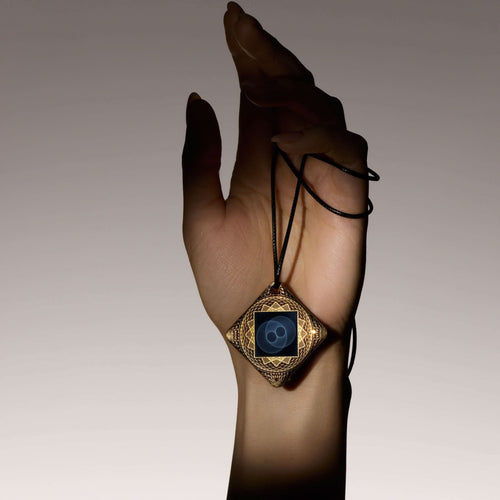
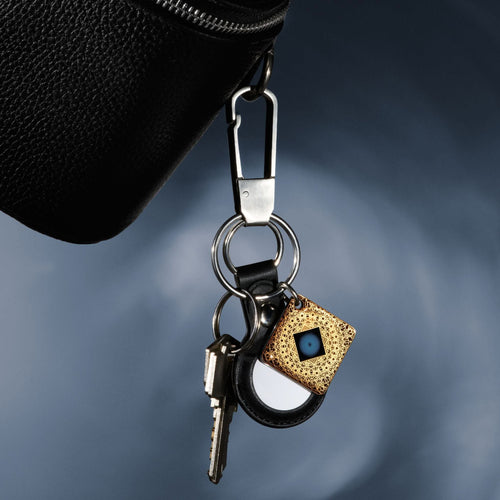
Aires offers a structural-modulation approach designed for use alongside connected technology. Compare the device mechanisms and evidence and choose a format using the Lifetune application guide. Keep the product, placement and outcome you want to observe clearly recorded, with the original research available for reference.
Updated October 28, 2026 · Aires editorial team. Original reports and publications are linked at the relevant findings.