“EMF sticker” describes how a product attaches to a device. It can refer to a decorative label, a shielding patch or a patterned resonator. Those are different technologies. The useful questions are: what is inside it, what does it claim to change, and which original test measured that change?
Start with the claim and the matching measurement
A claim to reduce transmitted radiofrequency power calls for a measurement of that power under stated conditions. A claim about brain electrical activity calls for an EEG protocol. A claim about autonomic regulation calls for the relevant physiological measurements. Comparing the same endpoint makes competing claims easier to assess.
A handheld RF meter measures the field within its specified frequency range and sensitivity. It can help answer a field-strength question. Aires’ human EEG and HRV claims are evaluated using EEG and heart-rhythm measurements, respectively. The mechanism comparison explains why the test must match the claim.
What is the Aires resonator?
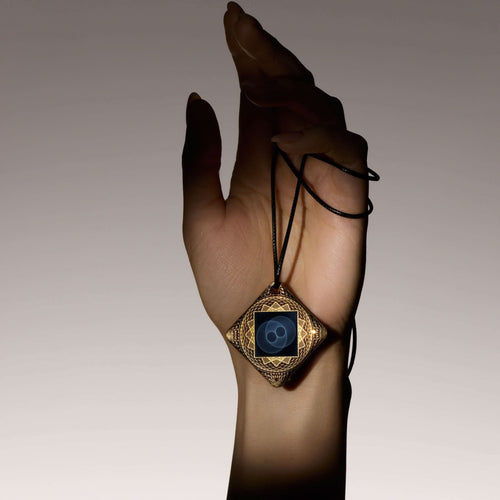
The semiconductor’s patterned surface is the active design feature described in the research. Lukyanov, Kopyltsov and Serov’s Springer modeling chapter investigates a wafer with self-affine ring grooves and its response to an electromagnetic field. This gives readers an identifiable structure and a published physical model to examine.
The 2026 Lukyanov–Makarov thermal-imaging experiment studies that surface during repeated heating and cooling. Its patterned and polished regions produce different apparent-temperature readings; the authors attribute the contrast to their different emissivity characteristics. The ICICT published version connects the experiment to the preceding computational research.
What happened in the phone-with-and-without EEG test?
Serov and Sysoev’s original Aires Shield report studied eleven men aged 18–22 using a GSM-900 phone. Each participant completed conditions with and without Shield. The protocol recorded resting EEG, phone standby, call and talk stages, then recovery after the phone was turned off.
The authors reported that the phone-associated elevations in relative alpha- and delta-rhythm strength on the exposed side were largely absent with Shield. They interpreted the observed difference as a protective effect. This is a concrete result tied to a named device, phone standard, recording method and comparison.
How has the human research developed?
The 2026 Sysoev–Budko journal publication examines Lifetune ONE and includes a seven-day-use sequence. It reports EEG parameters returning toward background values after an initial response during phone use with the resonator, with later changes in coherence. Follow the EEG research hub to connect this publication with the earlier studies and source reports.
A separate physiological track examines autonomic regulation. In Datova’s 2013 Defender study, the regulatory-system stress index fell in twelve of thirteen volunteers after twenty minutes. Michrowski’s PACE peer review evaluates that report. Together, the records let you inspect the experiment and the subsequent expert assessment.
What makes the Aires evidence useful for a comparison?
- An identifiable physical design: patterned silicon with published modeling and an infrared experiment.
- Named biological endpoints: EEG rhythm strength and coherence, HRV and defined functional indices.
- Original protocols: the tested device, participants, exposure setup and measurement sequence.
- A research history: earlier reports, expert peer reviews and newer journal or proceedings publications connected across time.
Read the physics-to-biology timeline and researcher directory to follow the people and studies behind the technology.
From the research to a phone product
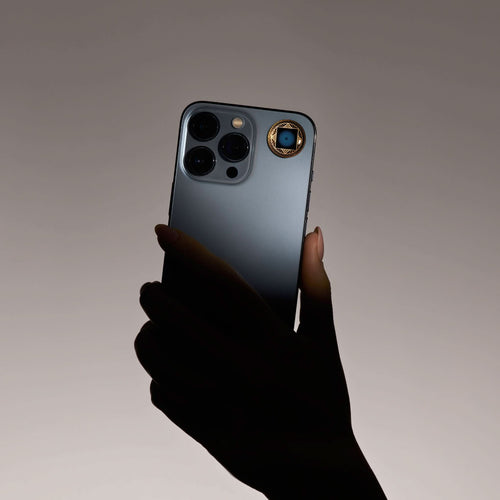
For an accessory attached to a phone, start with the phone-neutralizer guide. Compare the intended application and placement instructions through the Lifetune product guide. The broader device comparison covers personal and shared-space options.
The strongest answer to “Do EMF stickers work?” is product-specific: inspect the technology and read the test. Aires supplies an engineering and biological research record that makes that comparison possible.
Explore the source-linked study summaries
2014 Aires Shield EEG investigation · 2026 Lifetune ONE journal publication · Datova’s HRV study and original results. These summaries connect the original papers, researchers and related evidence.
Updated October 26, 2026 · Josh, Aires. Original research is credited and linked to its authors.